
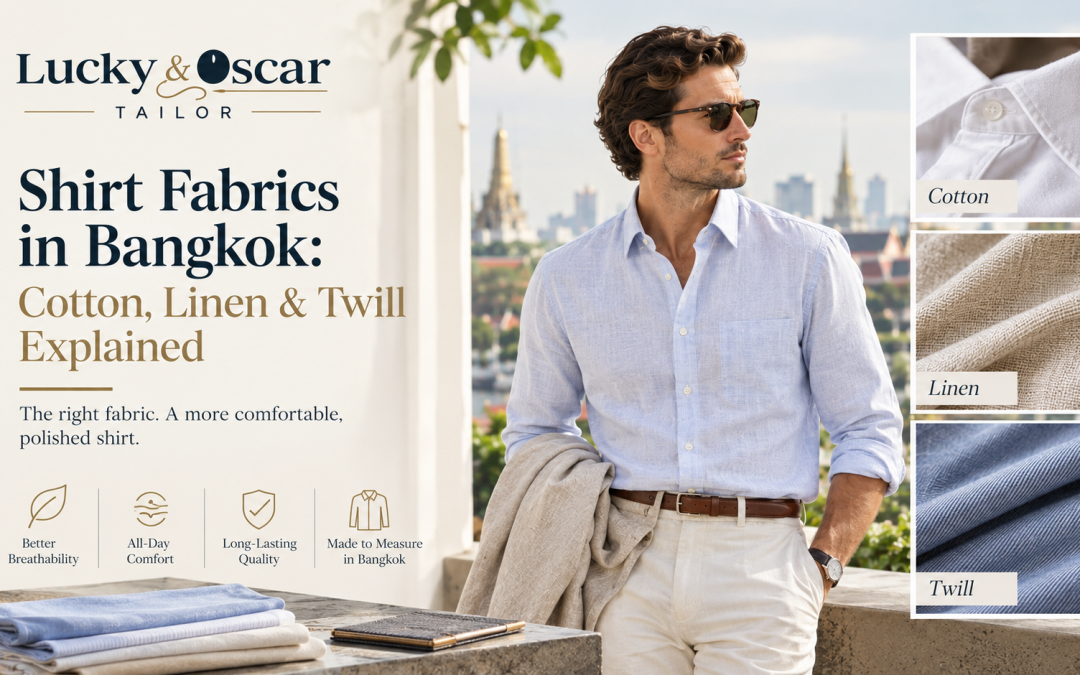
This guide to shirt fabrics in Bangkok starts with one practical rule: fibre, weave and finishing all matter. Cotton is versatile and comfortable, linen allows strong airflow and a relaxed texture, while twill is a weave rather than a fibre and is valued for its diagonal structure, smooth hand and durability. In Bangkok’s heat, lighter and more open constructions can feel easier outdoors, but office air conditioning, opacity, laundering and wrinkle tolerance can make a slightly denser shirt the better daily choice. Build a rotation around where you actually spend your day.
Start with fibre, then weave
Clients often compare “cotton, linen or twill” as if all three are fibres. Cotton and linen are fibres; twill describes a weaving structure that can be made from cotton or blends. That distinction matters because a cotton poplin and a cotton twill can feel very different. Poplin tends to be lighter and smoother, while twill usually has a visible diagonal line and can feel more substantial.
When ordering made-to-measure shirts in Bangkok, ask the tailor to identify both fibre and weave when possible. “100% cotton twill” tells you more than “twill shirt”. Then look at fabric weight, openness, opacity and finish. A shirt that feels beautifully cool when held up in the shop may be too transparent for your office, while a dense twill may feel polished but heavier during a midday walk.
Cotton: the versatile office starting point
Cotton remains a practical shirt fibre because it is soft, comfortable and available in many weaves. Cotton Incorporated describes cotton as breathable and notes that fabric engineering can change moisture and wrinkle performance significantly. In everyday tailoring, that means two cotton shirts with the same fibre percentage can behave differently depending on yarn, weave and finishing.
For shirts you will wear to the office often, consider a medium-light cotton that is opaque enough for professional wear and easy enough to launder. White and light blue are reliable starting colours because they work with most suits and jackets. If you dislike ironing, ask what “easy iron” or wrinkle-resistant finishing means for the specific cloth rather than assuming every treated cotton performs identically.
Linen: excellent airflow with a visibly relaxed finish
Linen is well suited to casual and warm-weather shirts because flax-linen testing cited by the Alliance for European Flax-Linen & Hemp shows strong ventilation and water-vapour permeability. The trade-off is a more textured surface and obvious creasing. That character can look excellent with chinos, open-collar tailoring and resort clothing, but it may be less suitable for a conservative boardroom that expects a crisp shirt all day.
Pure linen can also become more comfortable with wear and washing, but follow the care instructions for the actual cloth. If you like linen’s airflow but want a slightly more controlled appearance, ask about cotton-linen blends. The blend ratio and weave will determine the result, so treat the label as a starting point rather than a guarantee. If you would like the same fabric in a jacket, see our guide to linen suits in Bangkok.
Twill: structure, opacity and a smoother formal look
Twill’s diagonal weave can produce a soft, durable shirt with good opacity, which makes it useful for white business shirts. It often drapes smoothly and can feel less transparent than very light plain weaves. The downside in Bangkok is that a dense twill may hold more warmth than an open, lightweight fabric, so compare actual samples rather than choosing twill automatically for durability.
Twill is particularly useful when the shirt needs to survive frequent office wear, travel and regular laundering. A lighter twill can strike a good balance between polish and comfort. Pair it with a collar that works with your usual jacket and tie rather than selecting fabric and collar as separate decisions. If the shirt will sit under a suit, our guide to suit fabrics for every season shows what pairs well.
Cotton, linen and twill at a glance
| Option | Best use | Main strength | Watch for |
|---|---|---|---|
| Light cotton poplin | Business and everyday wear | Crisp, versatile, relatively light | Very light whites can be transparent |
| Cotton twill | Business, travel, cooler interiors | Smooth, opaque, durable feel | Dense versions can feel warmer |
| Pure linen | Casual, resort, warm outdoor use | Strong airflow and texture | Creasing and relaxed appearance |
| Cotton-linen blend | Smart casual and travel | Balances softness and texture | Performance varies by blend and weave |
How to build a Bangkok shirt rotation
Start with your weekly schedule. Someone in a formal office five days a week may need more cotton business shirts than linen. A digital nomad moving between coworking spaces and dinners may benefit from a mix of crisp cotton, one or two twills and linen shirts that can also be worn open-collar. Laundry frequency determines quantity as much as style preference.
Then build colour slowly. White and light blue cover the broadest range of suits; pale stripe, soft grey or subtle check can add variety, and our guide to colour matching for suits shows how they pair with suits. For casual linen, stone, olive, pale blue and muted earth tones can work well. The most useful shirt is the one that fits your collar, cuff, climate and laundry routine, not the one with the most exotic fabric name.
What to check at your fitting
Before you order, handle the cloth and ask a few practical questions:
- Handle several fabric weights, not just the fibre name, and browse the shirt fabric swatches to shortlist.
- Hold the swatch up to the light to check opacity, especially for white.
- Ask whether an undershirt will be visible through the cloth.
- Ask about care instructions and how often the shirt can be laundered in Bangkok’s climate.
- Confirm the collar works with your usual jacket and tie, and see how we take your measurements.
Why Choose Lucky & Oscar
At Lucky & Oscar, you choose the fabric, collar, cuff and back style for your shirt. Fabric options include wrinkle-free, premium cotton and Irish linen, with four collar styles, five cuff styles and four back styles to choose from. Our cottons are pre-shrunk before cutting, collars and cuffs are double thick, and monogramming is complimentary. At your fitting, we match fabric weight and weave to your office conditions, travel and laundry routine, so the cloth supports the fit and function of the shirt rather than being treated as a standalone upgrade. You can read more about Lucky & Oscar.
Useful Next Steps and Related Reading
- Lucky & Oscar custom shirts
- current shirt fabric categories and prices
- custom tailored suits
- contact Lucky & Oscar for a shirt fitting
- Linen suits in Bangkok: a practical bespoke fabric
- Made-to-measure vs bespoke: what’s the real difference?
- Custom tailor in Bangkok: in-person fitting vs online consultation
- Custom Shirts in Bangkok: How Many Do You Actually Need in a Starter Wardrobe [Add blog link after publication]
Conclusion
Use this guide to narrow your choices by real use: cotton for versatile daily wear, linen for airflow and relaxed texture, and twill when you want structure, opacity and durability. Then compare the specific weight and weave in your hand. Bangkok dressing often moves between outdoor heat and cold air conditioning, so a useful shirt rotation usually contains more than one fabric direction rather than relying on a single “best” material.
Frequently Asked Questions
Is linen cooler than cotton in Bangkok?
Linen can provide excellent airflow, but the finished fabric matters. A very open cotton weave may feel cooler than a dense linen, and indoor air conditioning can change what feels comfortable.
Is twill a fabric or a weave?
Twill is a weave structure characterised by diagonal lines. It can be made from cotton, wool or other fibres. For shirts, cotton twill is common.
Which white shirt fabric is least transparent?
A denser weave such as twill can offer better opacity than very light poplin, but weight, yarn and finishing matter. Hold the actual swatch against light before ordering.
How many shirt fabrics should I use in a starter wardrobe?
Most people benefit from a core of versatile cotton shirts, then add linen or textured shirts according to climate, dress code and laundry frequency. There is no need to force equal numbers of each fabric. A simple starting rotation of five shirts could be three cotton, one twill and one linen.
When choosing your next shirts, compare fibre, weave, opacity and care side by side. Lucky & Oscar’s shirt page shows the available style choices, while the fitting can match those choices to your weekly routine.
By Lucky & Oscar | Bangkok Tailoring & Style Experts